

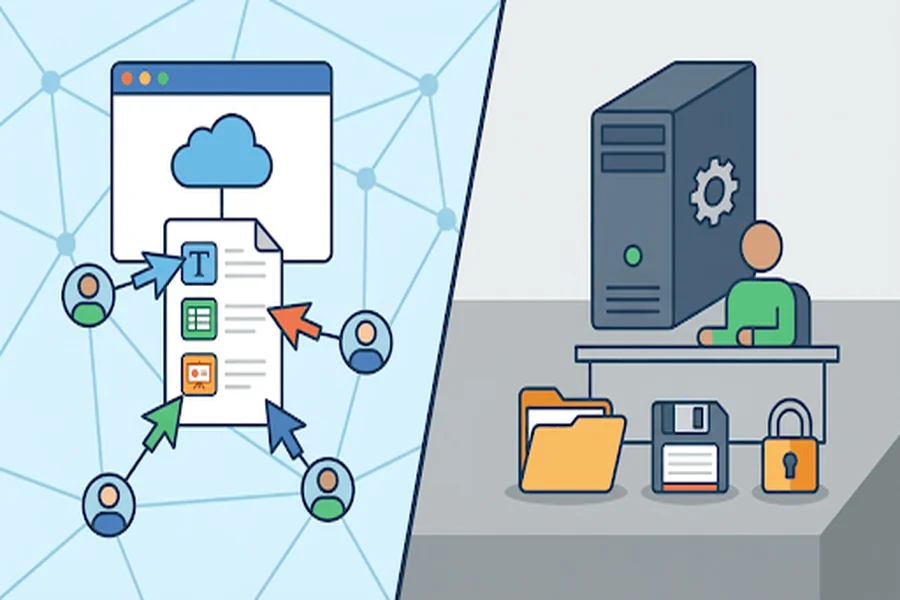
Document tools assist users in creating, sharing, and storing files together. A lot of people choose these tools because they are fast, have simple menus, and offer collaboration features. Some allow teams to talk, annotate, or specify who can access or edit a document.
Others focus on safe storage or simple integrations with other apps. The following sections highlight best picks, essential features, and everyday use tips.
Defining Document Tools
Document tools are a major factor in how we compose, distribute, and store documents in professional and personal contexts. These tools range from basic word processors and markdown editors to sophisticated platforms with integrated workflows, version control, and cloud connectivity.
Some are great for jotting down minutes or meeting notes, while others are geared towards technical documentation, manuals, or project guides. Many tools have a plain WYSIWYG editor and Markdown support, so you can insert links, images, code blocks, or even videos straight into the text, which makes them versatile for many tasks.
1. Creation
A good document tool lets you effortlessly write and craft all manner of documents. Meeting notes, project files, and user guides can be crafted from scratch or with templates that maintain everything spiffy and organized.
Some tools may have options to use different file formats, such as PDF, DOCX, or HTML, depending on your team or project requirements.
Sophisticated editing capabilities, such as real-time spell check, style suggestions, and formatting options, assist in refining technical documentation, making the final output more lucid and professional.
2. Collaboration
About: Defining Document Tools. Good document tools unite people. Many eyes can jump into a file simultaneously, with each on a different portion. This can be a huge time saver, but not all tools manage group edits gracefully.
Some restrict the number of editors simultaneously. While most have internal comments, so feedback and questions don’t get lost. Change tracking allows us all to know what’s new or who made what edit, which helps maintain a nice clean record.
3. Management
Tiding up documents is crucial for every team. Defining Document Tools: Document tools with a central database allow users to search, tag, and sort files to locate what’s needed. Version control keeps everybody on the latest draft and reduces confusion.
Certain platforms provide sophisticated search and knowledge bases to allow teams to save and edit shared information, keeping things uniform across projects.
4. Integration
A document tool that connects with your other apps signifies less platform-hopping. Several provide APIs or embedded connectors to project apps and cloud storage, so users can shift documents seamlessly or import status updates from elsewhere. Plugins can bring even more capability and allow teams to customize the tool to their needs.
5. Automation
Time is of the essence, and automation is one mechanism to conserve it. Document tools can autofill templates, run macros, or batch process files so repeat work is done quickly and with fewer errors. Automated approval flows keep everyone in the loop and track changes.
The Core Dilemma
That’s the core dilemma with document tools — how humans and teams hop back and forth between flexibility, ease of use, and reliability. Most struggle to integrate various platforms, which results in bumps, delays, and jumbled workflows.
Some hope new tech like blockchain will patch these holes by making edits simpler to verify and trace, but others argue tech alone won’t do. There’s a human aspect as well; professionals require tools that fit their routines and style. When these needs are missed, the result is real: more mistakes, wasted time, and less output.
Browser-Based
- Access browser-based tools from nearly any internet-connected device. This implies teams can work from home, an office, or even a café. It aids teams with members across numerous nations or time zones.
- These tools make collaboration seamless. Multiple users can simultaneously edit, comment, and review the same document. This comes in handy when deadlines are pressing or prompt feedback is crucial.
- The significant disadvantage is when the internet is down or slow. They can’t always work offline, which is a significant risk if reliable internet is not available.
- Online platforms employ robust protections, such as two-factor logins and data encryption. Others fret over privacy because files are housed on somebody else’s servers. Safe data rules vary from country to country.
Installed Applications
- Installed apps rule when speed and offline work are at their peak. They don’t require the web to open or store documents. That’s terrific for users with rigid privacy requirements or in locations with frail networks.
- They’re popular because they have rich feature sets, including superior formatting, plug-ins, and custom scripts. A few utilities even hook into other applications on the same machine, making them a favorite among power users.
- With all these benefits comes maintenance. Users need to update and patch or face bugs and security holes. This can be a headache for teams without IT assistance.
- Certain software requires a large storage potential or a specific OS. If a user’s computer is too old or too basic, certain apps simply won’t run well or at all.
The Collaboration Revolution
Collaboration tools have transformed how teams collaborate on documents. No longer tethered to a desk or computer, they edit, comment, and review files together in real time from anywhere in the world.
This transformation has enabled more seamless and rapid collaboration, minimizing friction and allowing teams to achieve better outcomes. Document tools these days aren’t only for writing; they cultivate environments where ideas take root and collective work happens.
Real-Time Editing
Now, with real-time editing, teams can write, revise, and format simultaneously. These tools make it so that when your coworkers make a change, you see it immediately, accelerating the process and helping everyone stay aligned.
Google Docs, Microsoft 365, and Zoho Writer are just a few places you can follow highlights, monitor changes, and add comments while the work is still in progress. Remote groups don’t need to wait for email attachments or guess which version is right.
If somebody messes up or wants to switch the strategy, the entire team can observe it and discuss it. This live editing prevents teams from doing double work or wondering what’s been updated.
Version Control
Tracking who edited what and when is easy with integrated version control. These systems track every change, so you can easily revert to an earlier iteration if necessary. Take, for instance, Dropbox Paper and Notion, which display a complete change history, so nothing is lost if someone wishes to review an old draft.
Teams can name versions, mark milestones, and ensure everyone is modifying the correct document. Clear naming and version saving rules keep everything organized and reduce redundant work or misplaced progress.
Commenting Systems
Commenting tools enable teams to leave remarks, pose queries, or provide recommendations directly in the document. Threaded comments keep comments focused, making feedback clear and easy to follow.
When someone resolves a comment, it is checked off as done, so nothing slips through the cracks before the final draft. Notifications inform teammates of new comments or replies, which helps keep everyone on the same page.
This open, concentrated feedback enables teams to identify errors, clarify confusion, and polish the end product.
Beyond The Page
Document tools today are not just capture devices. They influence the manner in which we communicate, educate, and relate to one another. Document” derives from the Latin “docēre,” which means “to teach.”
This history is echoed in how we’ve come to expect documents to not just display content, but to guide, connect, and even collaborate.
The look and feel of a paper can be just as critical as the text, particularly when exchanging it across borders and devices. Formats and features are the infrastructure of understandable expression in any discipline.
Smart Canvases
Smart canvases allow users to organize thoughts, checklists, and images in formats that are intuitive for the mission at hand. Drag-and-drop blocks allow users to shift text, images, or tables anywhere, so the format evolves with the assignment.
Certain tools enable multiple collaborators to work simultaneously, adding annotations, comments, or actions, transforming static documents into dynamic collaborative workspaces.
These canvases come in handy for brainstorming or when you need to plan projects, allowing you to visualize progress and keep ideas organized.
Embedded Media
Anything that can bring a document alive, like embedding videos or audio clips. The addition of pictures or charts breaks up copy, aids concentration, and enhances recall. Interactive elements, such as checklists or sliders, provide readers with active methods to participate. Linking to external resources provides additional perspective and transforms the paper into a resource for further exploration.
PDF Functionality
PDF utilities assist consumers in distributing information that appears exactly the same for everyone, regardless of the platform or device. Conveniences such as merging or splitting files allow users to handle large projects or transmit just the material required.
Built-in annotation tools make feedback fast and transparent. PDF forms can gather signatures or information securely, reducing paper and accelerating processes. Tools such as automatic tables of contents, bookmarks, and restore options make it easy to find or fix anything.
E-Signatures
- Sign contracts, agreements, and consent forms
- Approve purchase orders or invoices
- Confirm receipt of documents or deliveries
- Onboard new employees or partners
Secure signature tools. These may connect with other business tools, allowing users to send, receive, and store signed documents seamlessly. Fast e-signatures ensure deals close faster and teams move ahead without pause.
Securing Your Data
Protecting sensitive files is a high concern for companies and users. Secure document management begins with a security policy, a set of rules that specify how data is managed. Some common security measures are in the table below. While no tool is 100% cyber safe, these actions all combine to reduce risks.
| Security Measure | Purpose | Example |
| Access control | Limit who can view/edit documents | User permissions, audit trails |
| Encryption | Protect data from unauthorized access | AES-256, SSL/TLS |
| Secure storage | Keep sensitive data in protected locations | Cloud with data encryption |
| Two-factor authentication | Add an extra layer when logging in | One-time code via SMS/email |
| Audit logs | Track document changes and access | Automatic change log |
Access Control
Only grant users access to what they need. Set permissions so team members can view, edit, or share based on role. This reduces the risk of error or exposure. Role-based access is good for large teams with frequently changing roles.
Audit trails help track every change and access event. They reveal who viewed or modified files, which is important for both monitoring and responsibility. Keep these logs current and review them several times.
Adjust permissions as teams expand or contract. Cut off access when people exit or transition to new assignments. Never leave third-party access wide open; it should be temporary and as limited as possible.
A neat folder hierarchy keeps confidential files accessible and more difficult to abuse.
Encryption Standards
Strong encryption preserves data’s privacy from external observers. Employ end-to-end encryption and AES-256, a recognized industry standard. Ensure that your doc tool adheres to international standards such as SSL/TLS to secure files at rest and in transit.
Update your encryption configuration regularly to keep on top of emerging threats. Training teammates on why and how to use encryption gets everyone doing their part.
Bonus measures, such as two-factor authentication, provide them with an additional layer of protection, proving that it is not easy to crack.
Data Location
Understand where your documents reside, because this is significant for legal reasons. Certain laws mandate that data remain in specific locations. Cloud storage that has security built in can be good for sensitive projects. See if it fits your needs.
Audit your data retention policies regularly. Sometimes local storage is best for privacy, while cloud options are best for shared access. Align your selection with your workflow and legal requirements.
Selecting Your Solution
Choosing the right document tool means aligning it with your personal habits, your team’s workflow, and your company’s scale. A good fit makes daily work simpler, organizes files, and ensures collaboration among all. It pays to consider your needs, compare options, and consider how a tool will integrate into your existing systems.
Individual Needs
Begin by considering your requirements for a tool. If you jot down simple memos or detailed reports, choose a device that complements those documents. Some people prefer a barebones interface with core features, while others require sophisticated formatting.
Sample free trials first to see how simple it is to create folders, search files, or edit documents. If you’re struggling, it’s probably not the right fit. The learning curve is important. If a tool is difficult to learn, you’ll lose time. Search for obvious directions, clean menus, and easy dissemination.
If you have to create multiple versions of the same file, a version control feature is a necessity. Verify that the tool accommodates the document types you use the most. Look for the pricing page so you can determine which features you get for your money.
Team Requirements
For teams, emphasize how the tool facilitates collaboration. Real-time editing and commenting are critical for quick feedback and less confusion. A worthy system allows multiple contributors to work on the same document simultaneously and includes transparent version control.
Consider how many people will access it and their positions. Certain tools price per individual user, and some provide team licenses. Seek easy integration with other tools you already use, such as email or project boards.
A tool that aligns with your current process minimizes overhead and ensures what is going on under the hood is transparent.
Enterprise Scale
As your organization grows, so do its needs. Choose your own solution. Security weighs more at this stage. Seek out permissions, audit trails, and global compliance. Certain organizations may require on-premises deployment for more control.
Others can enjoy the easy access of SaaS. Support and training options assist new users and smooth transitions. Customization is crucial. If you can tweak the tool to your unique workflows, you’ll have fewer headaches down the road.
A thoughtfully integrated platform allows groups to access, edit, and distribute documents instantaneously, increasing efficiency on all ends.
Conclusion
New tools for docs deliver real solutions to old frustrations. Users can operate rapidly as groups collaborate by sharing edits and notes, resolving matters entirely on the page. Search becomes simple with no more file hunting.
Content remains secure with robust encryption and transparent policies. Each has its strengths, so choose what suits your workflow and team size. Some people prefer plain layouts. Others desire advanced settings or polished distribution.
Sample a few and see what clicks. With the right doc tool, you save time and keep your flow. Ready to discover what works best for you? I promise you’ll be glad you did.