
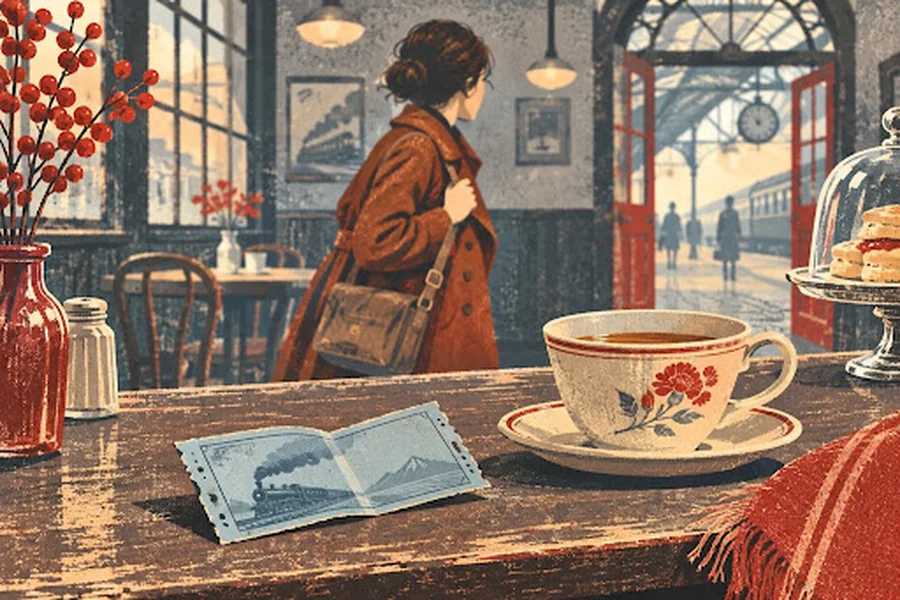
In an imagined railway-station café, a traveller tells a friend she hasn’t decided whether to leave. At the end of the film, the train pulls out with her on it. The first time through, you might remember the goodbye. On a second viewing, you might spot a folded ticket beside her untouched tea before the conversation even starts. The scene has been telling you something her dialogue keeps back.
That’s the pleasure of a good rewatch. Once you know where the story goes, you can pay attention to how it got there. Start with one moment that stayed with you and give yourself a specific job for the second pass. The examples here are invented, so you can try the method with any film or episode you already know.
Start with a scene you remember getting wrong
Think of a moment where you once misread someone’s intentions. Before replaying it, write a single sentence about what you thought was happening. “I thought she was waiting for permission to leave” gives you something more useful to test than “I missed a clue.”
If you’re choosing something from an on-demand catalogue, pick a film or episode you remember well enough to find that scene. The Portuguese-language page for You Cine describes both films and series on demand. Whichever catalogue you use, choose the version you watched before when you can. A recap can help you find the right episode, but the scene itself is where you’ll see how the performance, framing and timing shaped your first impression.
Look at the edge of the frame
Watch the café scene again and follow the person listening. Her friend talks about the next morning while the traveller keeps checking the doorway. Then scan the objects the camera holds in view. Is the ticket visible from the start? Does it come into focus halfway through? Those two choices let you discover the same fact at different times.
A useful check is to describe the shot before interpreting it. “She looks toward the doorway three times” is something another viewer can check. “She wants to escape” is an interpretation. If you find the same movement in a later scene, compare what happens immediately after it. A glance at the door might mean impatience in one scene and concern in another.
Find the cut that changes whose side you’re on
Imagine a father saying he sold the family shop because nobody wanted to keep it. If the film cuts to his daughter gripping the old keys before he finishes, you have time to question his account. If it stays on his face until the sentence ends, you have longer to sit with his explanation. The dialogue can be identical and the scene can still feel different.
Find the first cut after a difficult line. Whose face do you see? How long do you get to look at it? Compare that moment with a later argument between the same characters. You may find that one person got to explain themselves early on and the other only gets a reaction shot.
Listen for something you can’t see yet
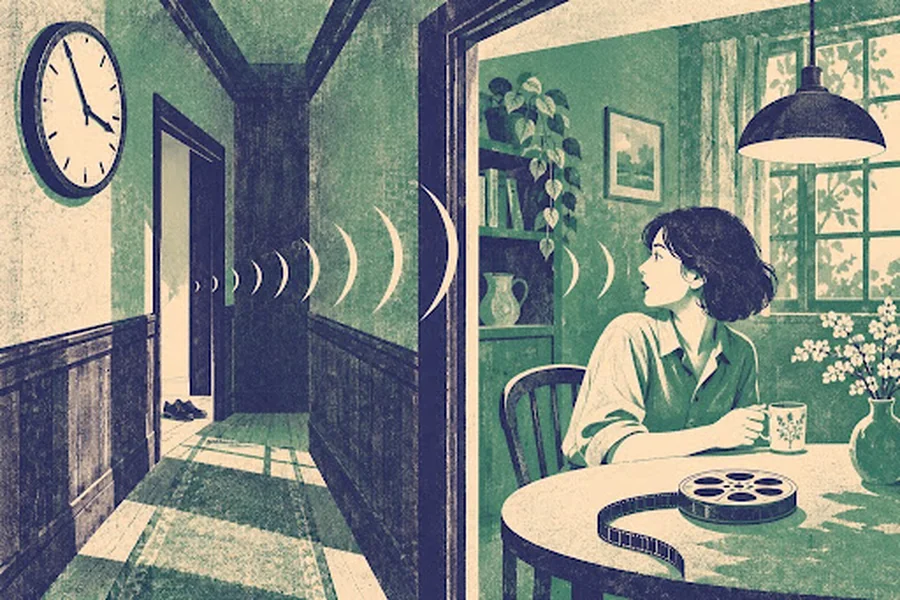
Replay a short stretch and listen for the first sound that seems to come from outside the frame. A shoe scraping in the corridor can make a character look up before the camera shows who has arrived. If the film cuts to the visitor later, you can point to the moment the arrival became part of the scene. On your first watch you may have been following the dialogue when it happened.
Use a rerun to follow one detail through a scene
A scheduled repeat calls for a slightly different approach. The Unitv apk guide in Portuguese describes live TV alongside on-demand viewing. If you happen to catch a familiar film or episode on a live schedule, give yourself a question you can answer as it plays, such as when the footsteps stop or whether the character looks at the door before or after hearing them. A specific cue is easier to follow when you’re watching at the broadcaster’s pace.
After the scene, jot down the location, a memorable line or the action that opened it. “Café scene, just after the waiter removes the second cup” will help you find your place later. If you switch from a broadcast to another edition, use the action as your marker. A timestamp from one version may land on a different shot in another.
Write down what changed your mind
Finish with three short notes. First, write what you believed on the initial viewing. Then name the detail you can now point to. Finally, explain what changed in your reading. For the café scene, that could be “I thought she was still deciding. The ticket was already folded beside her cup. Now I think she was trying to find a way to tell her friend.”
If you’re watching with someone else, ask which moment changed their mind. They may have noticed the folded ticket immediately but read the silence after the goodbye differently. Compare the two moments before you settle on an explanation. You might agree about what the camera shows and still have different ideas about the character. That disagreement can give you a better question to take back to the scene.