

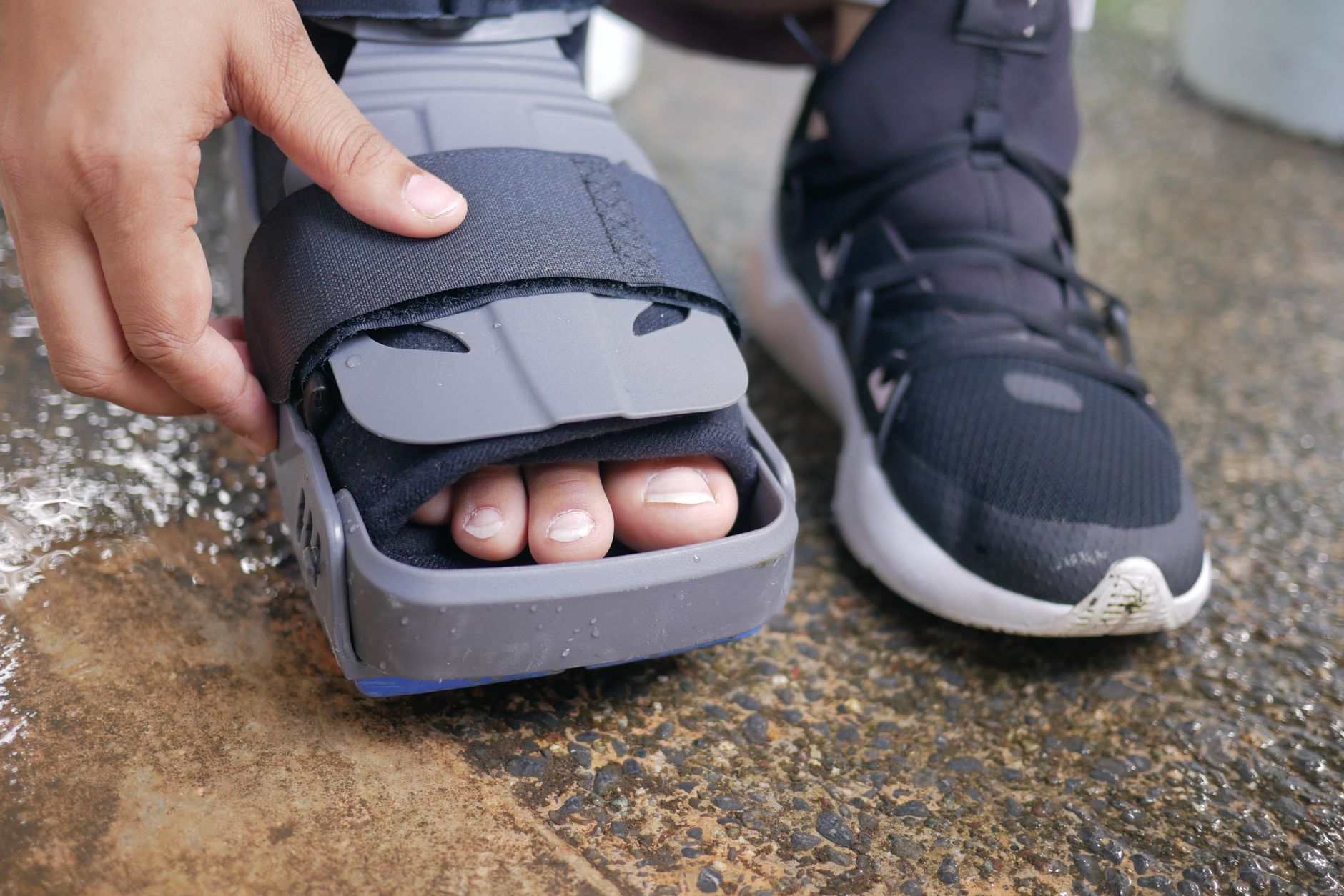
Every step, jump as well as the change of direction is influenced by your ankle joint. When you simply walk around during your job, stand for hours, do heavy workouts in the gym or enjoy participating in sports, your ankles function all the time to allow you to maintain your balance.
So, when the ankle pain, weakness along with instability in the balance of the body begins hindering your day-to-day life, not only walking becomes painful, but the physical exercise might require more effort from you as well as the fear of twisting your ankle becomes the constant companion.
The ankle joint is vital to your balance, walking, running and many other activities requiring putting some weight onto it. Ligaments, tendons, muscles and bones work in tandem allowing your joint to maintain the stability.
If any of the above mentioned is torn or injured, the additional assistance becomes helpful. For that, ankle brace can help improve the stability as well as let you move with confidence. Analyzing the demands put on your ankle can make choosing ankle support easier.
In this guide, you can learn more on when to wear an ankle brace for better support, daily comfort as well as stable movement.
An ankle brace is a device that is meant to fit around one’s ankle. It works through unique compression mechanisms to provide support to the joint.
How Does An Ankle Brace Work?
By offering stability
Some ankle braces have the capacity to restrict movement in the ankles.
By offering compression
Some ankle braces exert pressure on the ankle, which is useful in managing mild swelling.
By providing protection for healing ligaments
Suitable ankle braces ensure protection during the recovery process.
Boosting confidence
Useful in boosting confidence when moving around.
Risk reduction
Ankle braces minimize the risks of ankle sprain in people who had previously undergone operations or those at risk of re-injury.
Wearing An Ankle Brace In Case Of Sprained Ankle
One of the frequent causes for wearing an ankle brace is a sprained ankle. This involves stretching or tearing of the ligaments surrounding the ankle, caused by an abrupt twist of the foot.
It can occur due to various situations including walking on uneven surfaces, stepping off a step, landing incorrectly or playing sports.
The following are the common signs of a sprained ankle:
- Pain in the ankle
- Swelling and discoloration
- Tenderness upon palpation of the ankle
- Walking becomes difficult
- Feeling of instability of the ankle
An ankle brace can be used to facilitate the process of recovery of normal walking and other activities after the sprained ankle.
While Participating in Sports and Physical Activities
Basketball, football, badminton, tennis and volleyball require constant changing of directions, jumping, landing and quick acceleration. All these activities may be demanding to your ankles. The use of an ankle brace is helpful in cases where you need extra support during these activities. This would be especially important in case you have had an ankle sprain in the past.
What To Do If You Have Frequent Ankle Instability Episodes
Frequent instability episodes can suggest that the ankle support mechanism has not recovered from the previous injury. This condition is often linked with chronic ankle instability. The ankle support or brace might be considered in order to add an extra support to your ankle.
It will be helpful for you if:
- You are walking on uneven terrain.
- You are playing sports.
- You are doing exercises after sprains.
- You are involved in activities that involve rapid change of directions.
When You Stand for Long Periods During Work
Some professions require standing up for a long time or constantly walking. Medical practitioners, shop assistants, teachers, people from the hotel industry, and workers in factories may stand for many hours each day.
There may be people who would like to get an ankle brace design which will be useful for regular support. The use of an ankle brace should be considered by you when you:
- Have a history of ankle sprains.
- Require more support in the course of rehabilitation after some injury.
- Feel slight pain for which an external support was advised by a medical practitioner.
When Walking or Stair Climbing Is Uncomfortable
Walking and stair climbing involve bearing the weight of the body by the ankle joint and making certain movements possible with the foot. When you have had an injury to your ankle joint, these normal activities can now be uncomfortable or unstable for you. You might need an ankle brace when:
- You have started to walk again following a small sprain.
- You feel unstable due to your past ankle injury.
- You require external support during your rehabilitation.
- Your doctor has prescribed a brace for your ankle joint.
When Recovering From Ankle Surgery
Ankle surgery can include repairing ligaments, dealing with specific types of fractures, and dealing with issues that affect joints. While recovering, the ankle will need to be protected and moved very carefully. A medical professional may provide an ankle brace to
- Protect healing tissue.
- Control movements at specific stages of recovery.
- Help in the process of bearing weight again.
- Help with stability during rehabilitation.
When Should You Not Rely Solely on the Ankle Brace?
Even though there are times when an ankle brace will work well, there are instances when you need the assistance of medical professionals. You should get medical advice if you suffer from:
- Painful and swollen ankles.
- Inability to put pressure on your ankle after suffering an injury.
- Deformation of the ankle.
- Frequent giving out of the ankle.
- Pain that is persistent.
- Pain after suffering a fall or twisting injury.
Conclusion
Understanding when it is wise to wear an ankle brace allows one to make sound decisions regarding joint stability, injury protection and recovery.
In either case, where you have a sprained ankle, are resuming training activities, experiencing repetitive ankle instability or going through an ankle rehabilitation program, using a brace will be beneficial to your health with proper medical guidance.
Ankle joints carry you throughout the entire day, beginning with first steps upon waking up until the very last activity in the evening. Take care of your ankle joints and do not ignore any abnormal ankle pain.